
Daniel Johnson
10 Things to Check Before You Hire a Licensed Electrician in California
Electricians
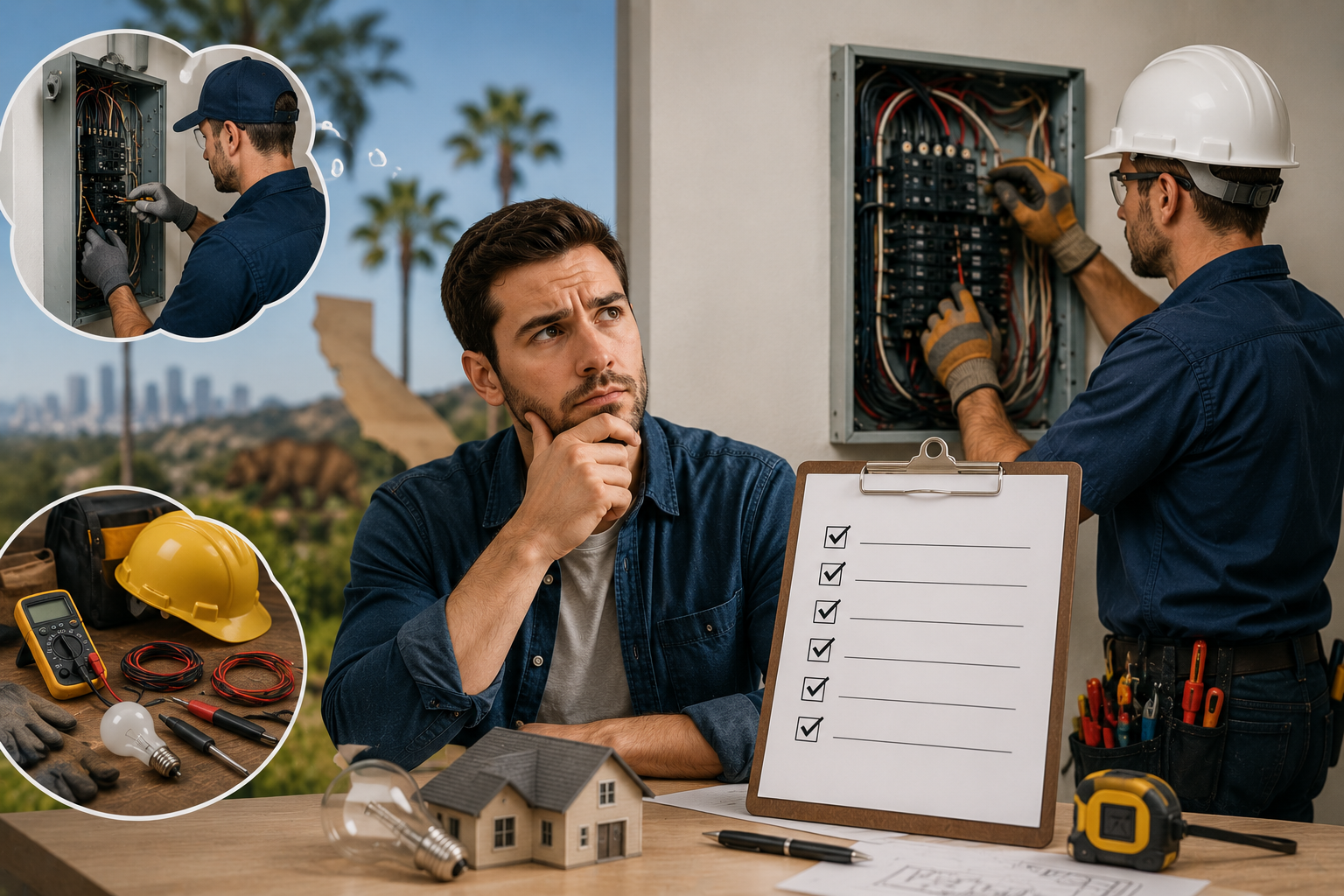
Hiring an electrician in California requires more than simply finding someone who can complete the job. Electrical work must meet applicable safety standards and building codes, and certain types of work require the appropriate state licensing and qualifications. Choosing an unqualified or improperly licensed contractor can result in unsafe installations, code violations, additional repair costs, and potential problems when selling or insuring a property.
California homeowners and businesses can take several steps to evaluate an electrician before work begins. This includes checking the contractor’s license, verifying insurance, reviewing relevant experience, understanding the scope of work, and getting a clear written estimate. It is also important to know who will actually perform the electrical work and whether permits or inspections are required for the project.
In this guide, we’ll explain 10 important things to check before hiring a licensed electrician in California. These checks can help you understand an electrician’s qualifications, compare contractors more effectively, and make an informed decision about who handles your electrical project.
Verify the Electrician's California License and Credentials
Before anything else, confirm that the person or company you're hiring holds valid, active credentials to perform electrical work in California. A licensed electrician in this state must operate under a system that covers both the business and the individual doing the hands-on work, and skipping this step is the most common mistake homeowners make.
Understand the Difference Between a C-10 License and Electrician Certification
California uses two separate credentials. The Contractors State License Board (CSLB) issues the Class C-10 Electrical Contractor license to businesses, allowing them to bid on and perform electrical work valued at $500 or more. Separately, the Department of Industrial Relations (DIR), through its Division of Labor Standards Enforcement (DLSE) Electrician Certification Unit, certifies individual electricians as journeymen or trainees. A legitimate electrical contractor should have an active C-10 license, and the workers on site should hold the appropriate individual certification.
Check the License Number on the CSLB Website
Every C-10 license can be looked up directly on the CSLB's public license search tool. This lets you confirm the license is active, see whether it has been suspended or revoked, check bond and workers' compensation status, and review any disciplinary history. Never take a license number at face value, always verify it independently rather than relying on what's printed on a business card or website.
Confirm the License Covers the Type of Work You Need
A valid C-10 license generally covers a broad range of electrical work, from lighting and panel upgrades to solar and EV charger installation. Still, it's worth asking directly whether the contractor regularly performs the specific type of job you're hiring for, since day-to-day familiarity with a task often matters as much as the license classification itself.
Are you a licensed electrician serving clients in California?
Get discovered by homeowners and businesses actively searching for a reliable electrician near them. Register with Yellow Pages California to expand your reach and grow your inquiries. Click here to register.
Check Experience, Insurance, and References
A license confirms legal qualification, but it doesn't guarantee quality workmanship. Reviewing an electrician's track record, insurance coverage, and past client feedback gives you a fuller picture of what to expect once work begins.
Ask About Years in Business and Relevant Project Experience
Ask how long the company has operated under its current license and whether they've handled projects similar to yours. A residential electrician who mostly works on single-family homes may not be the best fit for a multi-unit property, and a commercial electrician accustomed to office buildings may approach a small home repair differently than a residential specialist would. Matching experience to the job reduces the chance of delays or mistakes.
Confirm General Liability and Workers' Compensation Coverage
California requires C-10 contractors to carry an active bond, and workers' compensation coverage is now mandatory for licensed electrical contractors even if they have no employees. Ask for a certificate of insurance and confirm it's current. This protects you financially if a worker is injured on your property or if the job causes accidental property damage.
Read Reviews and Ask for Direct References
Online reviews offer a general sense of reputation, but asking for two or three recent references you can actually call gives more reliable insight. Ask past clients whether the work passed inspection, whether the crew showed up on schedule, and whether the final cost matched the original estimate.
Get a Detailed Written Estimate
A written estimate protects both parties by setting clear expectations before any work begins. Vague or verbal-only pricing is one of the biggest sources of disputes between homeowners and contractors, so this step deserves careful attention.
Compare Multiple Quotes for the Same Scope of Work
Request estimates from at least two or three providers of electrician services for the exact same project description. Comparing quotes side by side makes it easier to spot outliers, either a price that seems unusually low, which may signal corners being cut, or one that seems inflated compared to the local market.
Look for Itemized Labor, Materials, and Permit Costs
A trustworthy estimate breaks down labor hours, material costs, and permit or inspection fees separately rather than presenting one lump sum. This transparency makes it easier to understand what you're actually paying for and to identify where costs might change if the scope shifts.
Clarify What Could Change the Final Price
Ask what circumstances might cause the final bill to exceed the estimate, for example, discovering outdated wiring behind a wall or needing to upgrade an electrical panel to meet current code. A reputable professional electrician will explain these possibilities upfront rather than surprising you with add-on charges later.
Confirm Permits, Inspections, and Code Compliance
Many electrical projects in California legally require a permit, and skipping this step can create serious problems down the road, from failed home inspections to complications when selling a property.
Know Which Projects Require a Permit in California
Generally, work such as panel upgrades, new circuits, rewiring, and EV charger or solar installations requires a permit from the local building department. Simple repairs, like replacing a light fixture with an identical one, often don't. If you're unsure, ask the contractor directly which category your project falls into, and don't rely solely on their word, a quick call to your city or county building department can confirm it.
Ask Whether the Electrician Will Pull the Permit
Permits should generally be pulled in the name of the licensed contractor performing the work, not the homeowner. If a contractor suggests skipping the permit process or asks you to pull it yourself for work they're performing, treat that as a warning sign rather than a convenience.
Verify the Work Will Meet the Current California Electrical Code
California updates its electrical code on a regular cycle, most recently incorporating changes tied to the 2025 Energy Code. Ask how the contractor stays current with code changes and confirm that the completed work will be ready to pass a local inspection, since inspection sign-off is often what protects you if problems surface later.
Ask Who Will Perform the Electrical Work
It's not enough to know that the company is licensed, you also want clarity on which individuals will actually be on-site doing the work, since experience levels can vary significantly within the same crew.
Determine If a Journeyman, Master Electrician, or Apprentice Will Handle the Job
Ask whether the technician assigned to your project is a certified journeyman, a master electrician, or an apprentice working under supervision. Apprentices can perform valuable work under proper oversight, but complex or higher-risk tasks are generally better suited to someone with full certification.
Ask If Subcontractors Will Be Used
Some companies subcontract portions of a project to other electricians or trades. If subcontractors will be involved, ask whether they're also licensed and insured, and confirm who is ultimately responsible if something goes wrong.
Confirm the Certification of On-Site Workers
Individual electricians performing work under a C-10 license should hold current DIR certification. You can ask to see this documentation, particularly for larger projects where several workers may be on-site at different times.
Review the Contract, Warranty, and Payment Terms
Once you've selected a contractor, the agreement should be documented clearly in writing. A solid contract protects you if disagreements arise later about scope, cost, or quality of work.
Read the Full Scope of Work Before Signing
The contract should describe exactly what will be done, which materials will be used, the estimated timeline, and the total cost. Avoid signing anything that leaves the scope vague or open-ended, since ambiguity tends to favor whoever wrote the contract.
Understand the Warranty on Labor and Materials
Ask how long the workmanship is guaranteed and whether that warranty is separate from manufacturer warranties on materials like panels or fixtures. A local electrician who stands behind their work typically offers at least a one-year labor warranty, and many offer longer terms for larger installations.
Avoid Contractors Who Demand Large Upfront Payments
California law limits down payments for home improvement contracts to 10% of the total cost or $1,000, whichever is less, for most residential projects. Be cautious of any contractor who asks for significantly more before work begins, as this can be a sign of financial instability or, in rare cases, outright fraud.
Know the Red Flags Before Hiring an Electrician
Even with all the right questions asked, it helps to recognize warning signs that suggest a contractor may not be a safe choice, so you can walk away before signing anything.
Watch for Unlicensed or "Handyman" Electrical Work
Anyone offering to perform electrical work valued at $500 or more without a valid C-10 license is operating illegally in California. Unlicensed work often lacks proper insurance coverage and may not meet code, leaving homeowners financially exposed if something goes wrong.
Be Cautious of Cash-Only Deals or No Written Contract
Contractors who insist on cash-only payment and avoid putting anything in writing are harder to hold accountable if disputes arise. Legitimate businesses are generally comfortable providing invoices, contracts, and standard payment methods.
Avoid High-Pressure Sales Tactics or Unusually Low Bids
Be wary of anyone pushing you to sign immediately, claiming a special discount expires that day, or quoting a price far below every other bid you received. These tactics are commonly associated with less reputable operators cutting corners on materials, permits, or code compliance to win the job cheaply.
Conclusion
Choosing the right electrician in California comes down to verifying credentials, understanding the full cost and scope of the work, and confirming that the job will meet local code requirements from start to finish. Taking time to check licensing, insurance, experience, and contract terms before work begins can prevent costly problems later and give you confidence that the job will be done safely and correctly.
Whether you need a residential electrician for a home repair or a commercial electrician for a larger project, working with a properly licensed and certified electrician protects your property, your budget, and your peace of mind. Use the 10 checks in this guide as a practical checklist the next time you're comparing electrical contractors for your project.
FAQs About Licensed Electricians in California
How much does it cost to hire an electrician in California?
Hourly rates for electricians in California typically run higher than the national average, often in the range of $100 to $250 per hour depending on the region and complexity of the job, with many companies also charging a separate service call fee for the first hour. Larger projects, such as panel upgrades or rewiring, are usually quoted as a flat project price rather than an hourly rate.
How do I verify an electrician's license in California?
You can look up any contractor's license number through the CSLB's online license search tool, which shows whether the license is active, its classification, bond status, and any disciplinary history on file.
What is the difference between a licensed electrician and a handyman?
A licensed electrician holds a C-10 contractor license and, in most cases, individual DIR certification, both of which require documented experience and passing state exams. A handyman generally isn't authorized to perform electrical work valued at $500 or more and typically lacks the same code training, bonding, and insurance requirements.
How long does an electrical inspection take after work is completed?
Once a permit is closed out and the contractor requests a final inspection, most local jurisdictions in California schedule inspections within a few business days to about two weeks, though timing varies by city and current inspector workload.
Is it safe to hire an unlicensed electrician for small jobs?
It's not recommended, even for small jobs. Unlicensed work may not meet current code requirements, typically isn't covered by liability insurance or a contractor's bond, and can create problems with home insurance claims or during a future home sale if the work is later discovered to be non-compliant.
Suggestions